
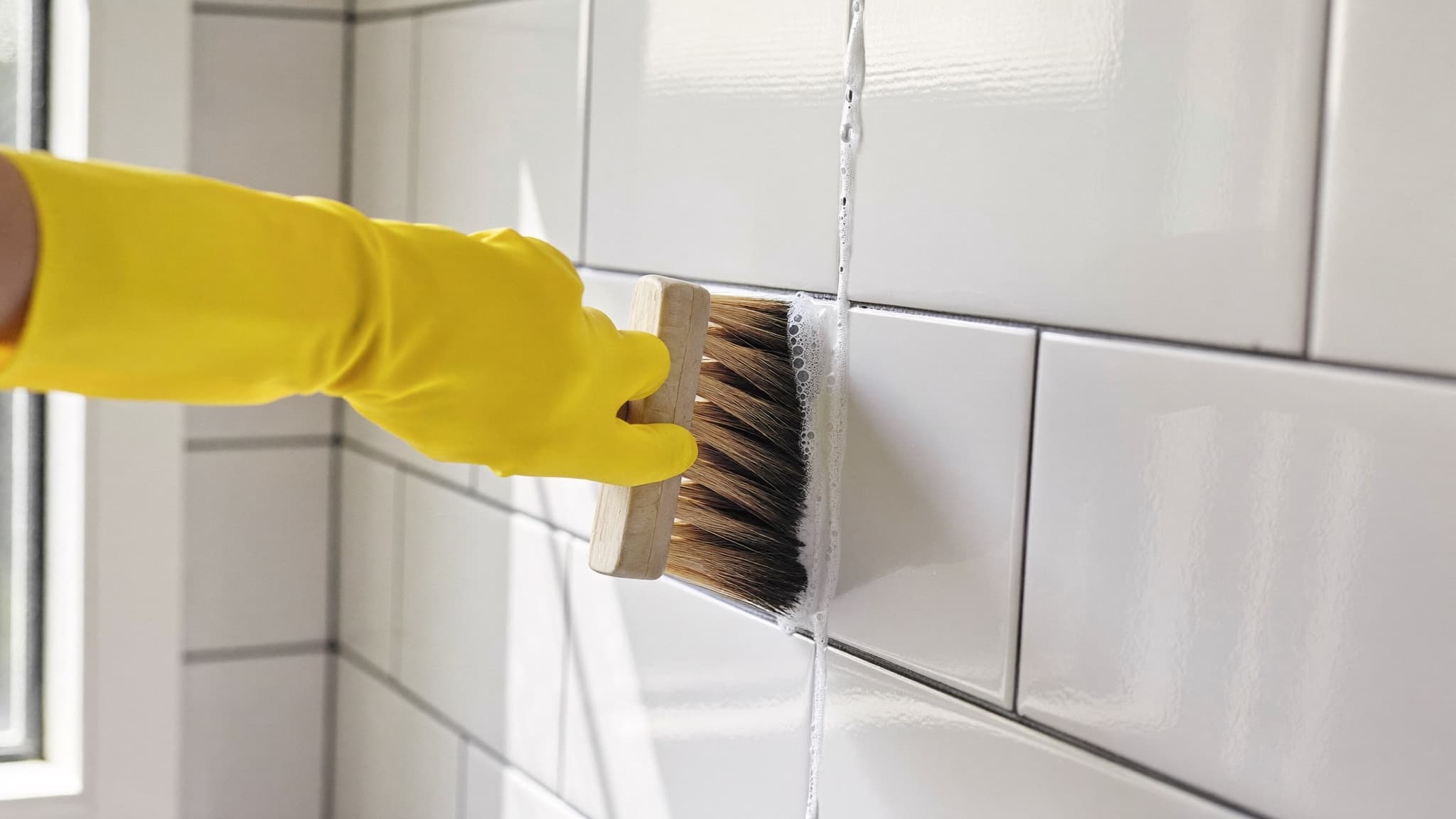
Grout is the one surface in a tiled room that gets dirtier the more you clean around it. The tile wipes bright in seconds; the lines between stay gray, and every mopping seems to make them a shade darker. That's not bad cleaning — it's chemistry and geometry working against you, and it has a fix.
The method below works on kitchen floors, bathroom walls, and shower surrounds alike: dry pass first, the right cleaner with real dwell time, a brush that fits the line, and a rinse that doesn't put the dirt back. Just as important is what to keep away from grout — including the vinegar shortcut half the internet recommends.
Why grout gets dirty faster than the tile around it
Most grout is cement-based, and cement is porous — under a glaze-smooth tile surface, the grout line is effectively a narrow strip of sponge. On floors, it's also recessed: every pass of a mop carries dirty water across the tile and deposits it in the lowest point, which is exactly the grout line. The tile sheds the water; the grout drinks it. Do that weekly for a couple of years and the lines turn uniformly gray even in a house that's cleaned often.
In showers the mechanism is different but the result is the same: soap scum and body oils cling to the porous surface, and the constant moisture lets mildew take hold in the pores. That's why the fix isn't one magic product — floor grout and shower grout collect different dirt, and the last section of this guide splits them apart. The common thread is porosity, which is also why sealing (covered below) is the only thing that makes grout stop re-staining.
What to use on grout — and what quietly ruins it
Grout cleaning is one of the few jobs where the pantry option genuinely outperforms most of the products in the cleaning aisle. What matters is pH: cement grout is alkaline, so alkaline and neutral cleaners are safe on it, while acids attack the grout itself.
| Cleaner | Best for | Watch out for |
|---|---|---|
| Baking-soda paste | Routine cleaning, light graying — the default first move | Needs a brush and a few minutes of dwell; not a spray-and-wipe |
| Oxygen bleach (sodium percarbonate) | Deep gray, large floor areas, minimal scrubbing | Needs warm water and 15–30 minutes to work |
| Alkaline all-purpose cleaner | Kitchen grout with grease in the mix | Check the label — many bathroom cleaners are acidic |
| Steam cleaner with brush nozzle | Chemical-free deep clean, textured tile | Keep it off unsealed natural stone and cracked grout |
| Chlorine bleach, diluted | Last resort on white grout only | Degrades grout with repeated use; blotches colored grout |
The do-not list is short but strict. Vinegar and other acids dissolve cement grout a little with every use — the lines get rougher, more porous, and dirtier faster, which is the opposite of the goal. Metal brushes and abrasive scouring pads scratch both grout and tile glaze. And on colored grout, test anything stronger than baking soda in a hidden corner first, because pigment that gets stripped unevenly cannot be cleaned back. If you prefer buying a labeled product over mixing your own, the EPA's Safer Choice directory lists cleaners vetted for both effectiveness and safer chemistry.
The step-by-step method for most grout
The order matters more than the muscle. Grit ground into wet grout acts like sandpaper, and cleaner wiped off too early never gets the chance to work — so the sequence is dry first, dwell second, scrub third.
- Vacuum or sweep first so loose grit doesn't get scrubbed into the lines
- Mix baking soda with just enough water to make a thick paste, and spread it along the grout lines
- Let it sit five to ten minutes — the dwell does more than the scrubbing will
- Scrub with a stiff nylon grout brush (or an old toothbrush) in small circles, one section at a time
- Rinse with clean water and a wrung-out microfiber cloth or mop — change the water often
- Dry the lines with a towel so the rinse water doesn't soak back in
Work in sections of a few square feet rather than pasting the whole floor at once — the paste dries out, and dried paste stops working. On wall tile, mist the lines with water first so the paste clings instead of crumbling off. Expect a real difference after one pass on lightly grayed grout; heavily stained floors often need the oxygen-bleach step below to finish the job.
How to clean grout without scrubbing
For a whole kitchen floor, scrubbing every line by hand is a knees-and-hours job, and there are two honest shortcuts. The first is oxygen bleach — sodium percarbonate, sold as a powder. Dissolve it in warm water per the package directions, sponge or pour it along the grout lines, and keep them wet with the solution for 15 to 30 minutes. The oxygen does the lifting; you follow with a light brush pass and a clean-water rinse. Unlike chlorine bleach, it's color-safe on most grout and doesn't degrade the cement with normal use.
The second is heat: a handheld steam cleaner with a small brush nozzle loosens embedded dirt from the pores as you trace each line, no chemicals involved. It's slower per foot than the soak but excellent on wall tile and textured surfaces where a soak won't stay put. Skip steam on grout that's already cracked or crumbling — forcing hot vapor into failing grout pushes moisture behind the tile, and that trades a cosmetic problem for a structural one.
Floor grout vs. shower grout: different dirt, different fix
Floor grout collects tracked-in soil and mop-water residue — mineral and greasy dirt that responds to the baking-soda and oxygen-bleach methods above. Shower grout collects soap scum, body oils, and, given enough standing moisture, mildew. The cleaning method is the same, but the aftercare is different: in a shower, the win is drying. A squeegee pass after the last shower of the day — the same habit that keeps glass shower doors spot-free — takes the moisture out of the grout's day, and running the exhaust fan for twenty minutes afterward finishes the job.
If the dark spots in your shower grout come back within a couple of weeks no matter how well you clean, you're not looking at dirt — that's mildew living in the pores, and it needs a different playbook: treatment that kills growth in the grout, plus the ventilation fix that stops it returning. Our bathroom mold guide covers that whole battle — bleach vs. vinegar, caulk vs. grout, and when black growth is a call-a-pro situation.
When cleaning won't fix it
Grout has a point of no return, and it's worth recognizing before you spend a third weekend scrubbing. Unsealed grout that has absorbed dirty mop water for years can be stained through its full depth — the surface you scrub clean is the same color all the way down, and no cleaner reverses that. The honest test: if a proper baking-soda pass followed by an oxygen-bleach soak doesn't visibly change the color, the color is the grout now.
From there you have two real options. A grout colorant — a bonded coating that re-colors and seals the lines in one pass — is the budget fix and holds up well on floors. Regrouting is the full reset: the top layer of old grout is removed and replaced, and it's the right call when grout is also cracking, crumbling, or pulling away from tub edges, because those gaps let water behind the tile. And a quiet rule that saves repeat frustration: corners and the tub-to-tile joint should be flexible caulk, not grout — if someone grouted those joints, they will keep cracking no matter how well anything is cleaned.
Sealing: the step that keeps grout clean
Everything above treats symptoms; sealing treats the cause. A penetrating grout sealer soaks into the pores and makes the line shed water and oils instead of drinking them — the difference between dirt sitting on the surface (a thirty-second wipe) and dirt soaking in (this entire article). Check whether yours is sealed with the water-drop test: a few drops on a clean, dry line should bead up. If the grout darkens as it absorbs, it's unprotected.
Seal only clean, fully dry grout — sealing traps whatever is in the pores, dirt included, so it's the final step after a deep clean, not a shortcut around one. Application is simple: brush or roll the sealer along the lines, let it penetrate per the label, and wipe the excess off the tile before it hazes. Sealer wears with traffic and scrubbing, so re-test high-use areas — shower floors, kitchen walkways — every year or so and reapply when the drops stop beading. Epoxy grout, common in newer showers, never needs sealing; if you're unsure which you have, the water-drop test answers it either way.
How often to clean grout
Grout rewards small, frequent habits far more than heroic annual scrubs — mostly because sealed-and-maintained grout never lets dirt establish depth.
| Frequency | What to do |
|---|---|
| Weekly | Vacuum tile floors before any wet cleaning; squeegee the shower after use |
| Monthly | Baking-soda pass on kitchen and bathroom grout lines, plus a clean-water rinse-mop |
| Once or twice a year | Deep clean (oxygen bleach or steam), water-drop test, and reseal where the beading has failed |
If you're building a whole-house rhythm rather than a grout-only one, our house cleaning schedule lays out the daily-to-seasonal cadence for every room, and the deep cleaning checklist shows where grout detailing fits among the other few-times-a-year jobs.
When to hand it to a crew
One bathroom's grout is a podcast-length project. A whole house — kitchen floor, two or three bathrooms, an entryway — is a full day on your knees, and it's exactly the kind of job that keeps getting scheduled for “next weekend.” A recurring clean flips that math: tile floors get vacuumed and damp-mopped properly on every visit, so the grout never absorbs the layered grime that makes the deep clean brutal in the first place.
Our home cleaning service covers tile floors and bathroom surfaces on every visit, starting at $150 with the same cleaner every time. We're a background-checked, bonded and insured crew cleaning Puget Sound homes since 2022, and we serve north King, Snohomish, and Skagit counties — from Seattle, Bellevue, and Kirkland up through Everett, Marysville, and Arlington to Mount Vernon and Burlington. Every visit is backed by a 100% satisfaction guarantee, and you can get a flat quote in about 60 seconds.